Homes

A researcher’s story: what our work means for single mothers and their children

Single mothers and their children are being pushed into homelessness, then trapped there by housing-related debt they often have no realistic way to repay. This research exposes how debt rules are keeping families in temporary accommodation, leaving children to grow up without the safety, stability and dignity of a real home. By bringing these stories and injustices to light, the work is helping to shift policy towards a fairer, more humane housing system.

How Debt Rules Turn Temporary Accommodation into a Trap.

When we began this research at King’s College London, we already knew single mothers were disproportionately represented in temporary accommodation.

But as we listened to their stories, the scale and cruelty of the system became undeniable. We heard how debt—rent arrears, council tax, even debts created through economic abuse, was not just pushing families into homelessness, but trapping them there. Once in temporary accommodation, debts worsened and mothers were told they could not move on until they cleared arrears which they had no realistic way to repay. Children were growing up in limbo—physically unsafe, emotionally strained and cut off from stability.

We uncovered how housing‑related debt-rules quietly locked thousands of families out of social housing, including more than 3,700 households in a single month. Shockingly, 88% of local authorities applied debt disqualifications, leaving families stuck in temporary accommodation and only 1 in 5 protected domestic abuse survivors, despite debt often being a direct result of that abuse. These practices are not only unjust but many are unlawful under the Equality Act.


Pexels Kpaukshtite

Our findings changed the national conversation.

Throughout 2025, our research was cited in the Government’s National Plan to End Homelessness  and we were invited to shape policy at ministerial summits, parliamentary panels, and the London Assembly. We worked with the Chartered Institute of Housing to create practical guidance showing how local authorities can support survivors of domestic abuse who find themselves homeless. Our recommendations have focused on the immense benefit that is found through adopting early intervention, flexible policies and writing off abusive debt to prevent children living for years in unsuitable accommodation.

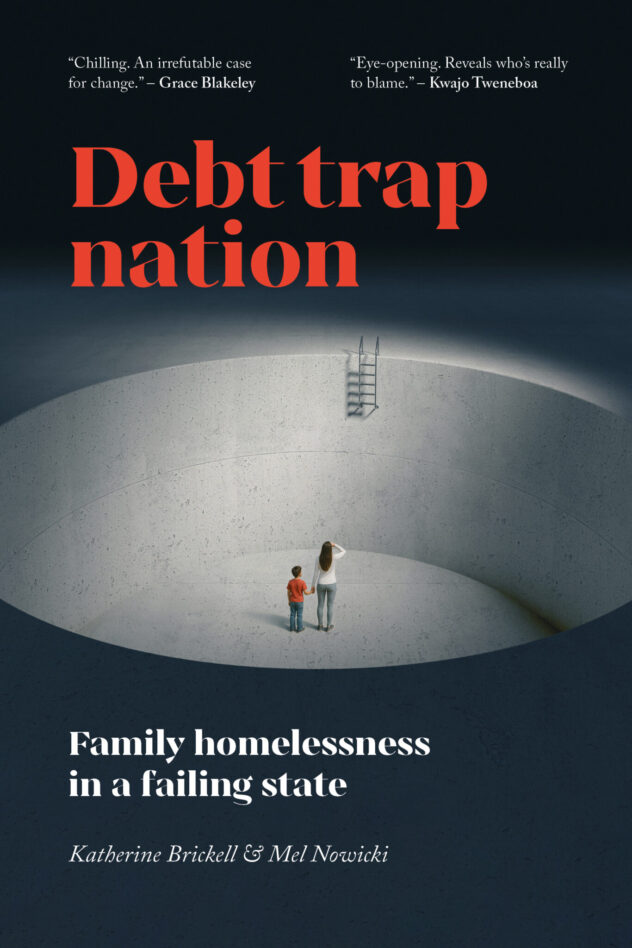
Debt Trap Final Cover

“For us, the most meaningful outcome is what this shift represents for single mothers and their children:

– A system starting to recognise the harm it created and a pathway opening toward safety, dignity and a real home.

– Families who were once stuck in permanent precarity are now closer to moving forward—not because they changed but because the system is beginning to.

And that is why we continue this work.”

Katherine Brickell and Mel Nowicki are authors of the book Debt Trap Nation: Family Homelessness in a Failing State (2025)

https://www.debt-trap-nation.org/book

Want to learn more about how we work?

Explore our approach or meet the team behind our work.

Related work in action