An exploration with Nature Based Neighbourhoods: Growing Strong
The Wates Family Enterprise Trust and Lund Trust, have launched a new partnership rooted in the shared belief that everyone deserves access to nature on their doorstep. With support from Gower St, we’ve pooled resources and experience to co-develop Nature Based Neighbourhoods: Growing Strong.
The power of urban nature
When designed with the community, for the community, urban nature has the power to transform local ecosystems, economies and the health and wellbeing of those who live, work and play there.
Urban green and blue spaces have been shown to be a source of pride, a social glue, and to encourage pro-environmental behaviours – creating a positive feedback loop for people and nature.
And yet, for many urban neighbourhoods in the UK, nature can feel distant, especially in our most disadvantaged and marginalised communities.
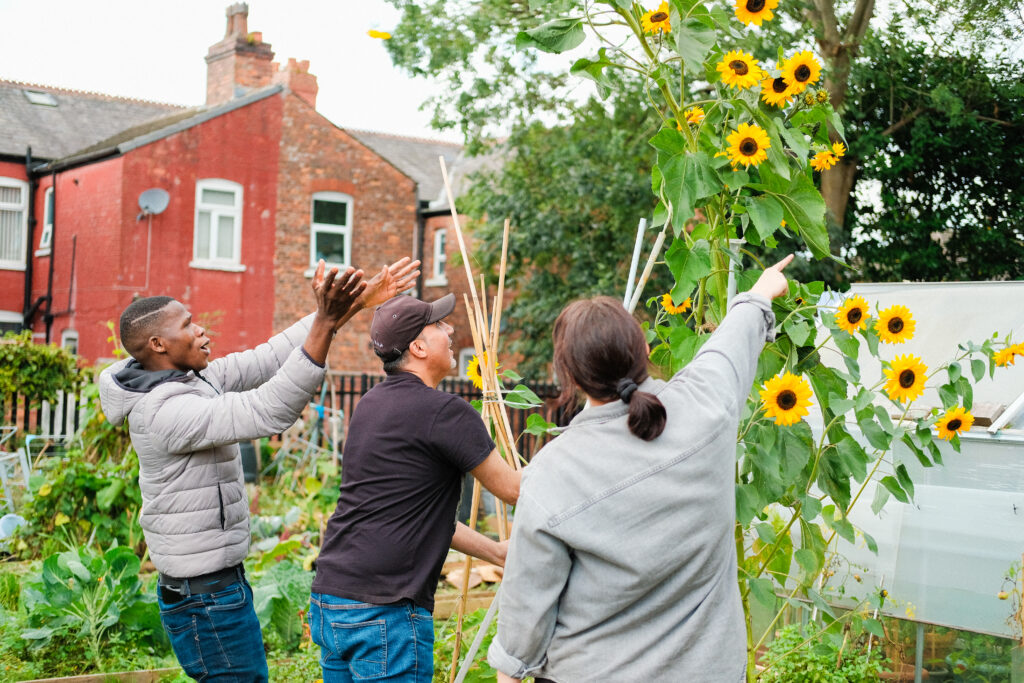
Image credit: Hubbub UK
A partnership rooted in trust
The five-year programme, Nature Based Neighbourhoods: Growing Strong, draws on learning from place-based funding and those working across the field. At its heart is a clear ambition: to strengthen the connection between people, place and nature by investing in community. It will explore what it takes to enable neighbourhood transformation with a legacy.
Five principles guide our approach:
Respect for community autonomy and trust that communities know what change is needed
Plan for long-term sustainability from the outset – we are entering with the exit in mind
Stay open, responsive and learning-led
Keep it simple
Create the conditions for joy, pride and inspiration
How does it work?
The concept is simple. By providing resources and inspiration, the programme seeks to build communities’ ability to embed nature into their day-to-day lives. This is done through a sustained investment in neighbourhood organisations that are part of and know their communities.
The investment includes five years of core funding to each organisation, with an additional flexible training budget, funds for community events, and funding for time to engage with the programme’s Measurement, Learning and Evaluation approach. In year two, there is additional funding for community-led nature-based solutions.
Wrap-around support includes: a peer network, a dedicated learning partner and inspirational resources, trips and knowledge exchange with those working to green neighbourhoods across the UK.
The support package has been designed in consultation with those involved. It aims to equip participants with the resources needed to grow their networks, develop long-term models, and feel connected to a wider movement, supporting a ripple effect.
The approach we have developed together is summarised in ourtheory of change.
In its first year, the programme is working with seven community partners across Derby and Wolverhampton. Neighbourhoods and community partners have been selected with the support of place-based systems change partners Renaisi-TSIP. National mapping identified areas of environmental and social need with historic underinvestment.
The community partners selected need not have a green track record. Instead, they share our belief that nature-based neighbourhoods can combat some of the many challenges society faces.
Suffice it to say, nature is not a standalone concern. Its myriad co-benefits can help to meet community priorities such as cost of living, health, education, skills. Especially when it touches our daily lives through food, sport, and play.
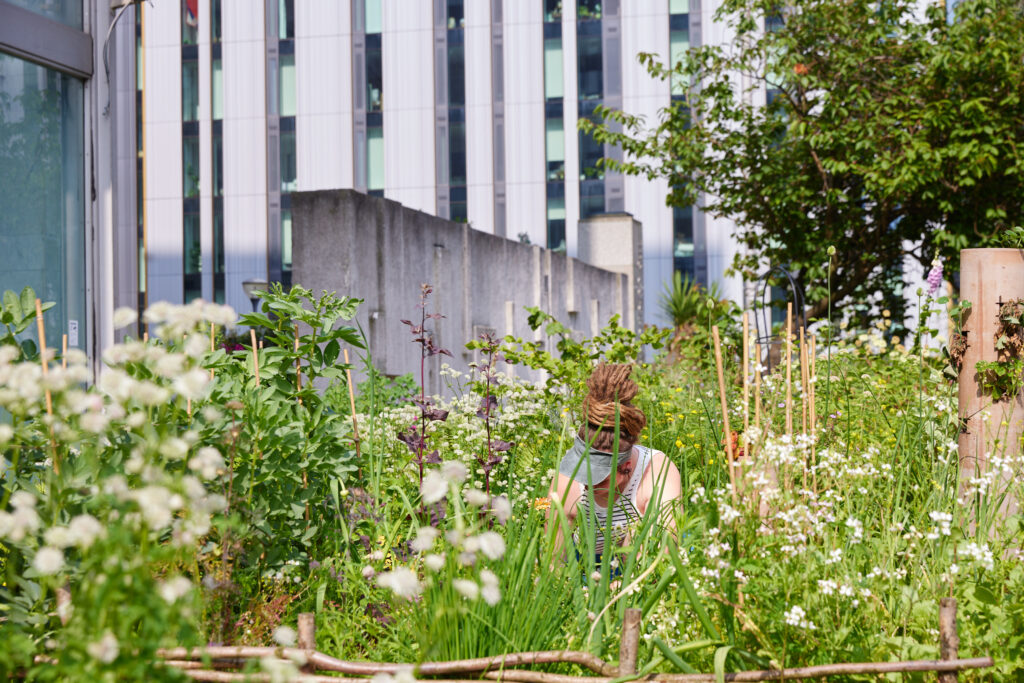
Image credit: Plant CIC
‘Living Plans’
Throughout the first year, these organisations will work with local residents to develop ‘living plans’ for their neighbourhoods. Plans rooted in local priorities that show potential for tangible lasting change to local green infrastructure. The neighbourhood boundaries are set by the residents. This allows the programme to meet residents at touchpoints in daily life.
The plans developed within the first year will be resourced in the second. Emphasis will be on long-term sustainability and stewardship of the spaces created. This means investing in local skills, nurturing partnerships, and supporting residents to shape local policies to ensure the space has a lasting locally-owned legacy.
Growing local partnerships
Evidence from other place-based programmes shows this kind of work succeeds when residents, paid local individuals or organisations, and local businesses and authorities collaborate.
Our role is to provide the resources community organisations need to build relationships and trust that outlast our funding. Early conversations show the potential for local public and private partners to invest in the ideas and networks emerging from this work.
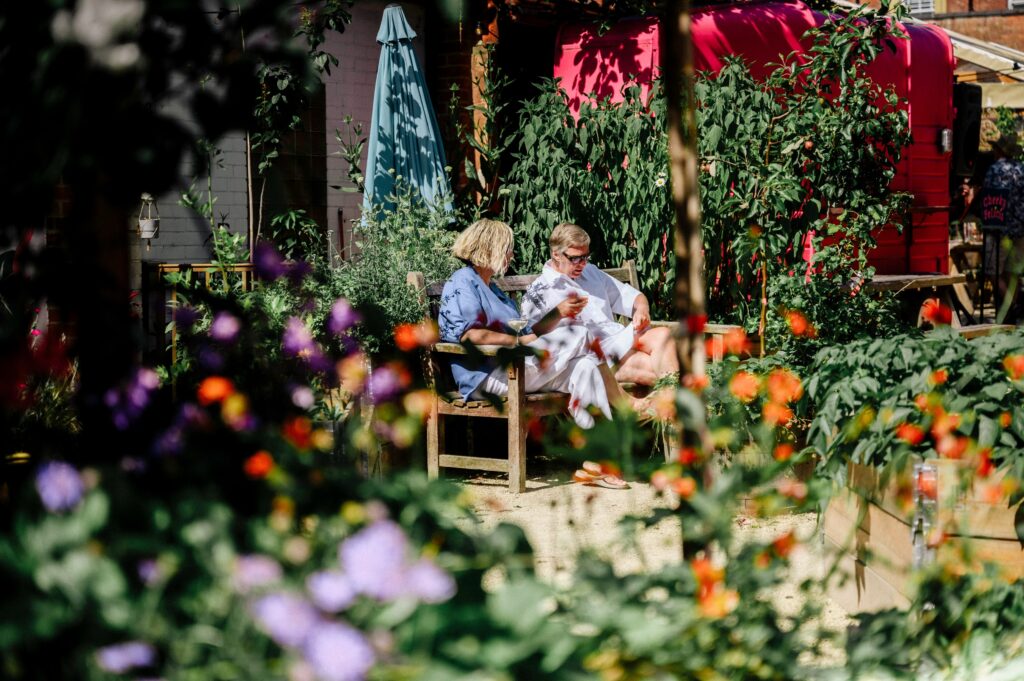
Image credit: Down to Earth Regen
Place is personal, so is nature
While the concept is simple, we expect the results to be rich and varied. We are holding many complexities in the frame. For example, ‘What constitutes quality urban nature?’ For some, this is space to walk a dog or play football. For others, it’s biodiverse planting or doorstep food production.
‘Does the presence of nature equal nature connection?’ In several of the neighbourhoods selected, there’s plenty of greenery to be seen, but issues such as safety prevent access to its full benefits.
Nature connection requires community connection
While each community will create a bespoke approach, a unifying theme is emerging. Belonging. During visits, we’ve repeatedly heard that people’s sense of pride and ownership “stops at their front door”.
How can we help neighbours to feel proud of the streets they share? Can having a stake in shaping these streets invite a sense of ownership and belonging?
The first step is creating the conditions for people to come together. Supporting the community to hold spaces to imagine, spaces to connect, spaces where everyone feels they have a stake.
These small, consistent moments of connection are the foundations upon which we hope the programme will grow. Year by year, we will invest in what’s valued, what works, what brings people together. Investing in the capacity to work collectively aims to build the social infrastructure to make this work ‘stick’, take root, and grow
We are committed to sharing our learning – what’s worked and what hasn’t. Our methodologies span qualitative and quantitative social and environmental metrics, including mixed media community storytelling, and ‘Stories of Change’ – a methodology that thrives on complexity.
It may be years before we have a shiny impact report, if at all. But we’ll journal the journey on a bi-annual basis via WFET’s LinkedIn. Be in touch with us directly if you’d like to share learning or partnership opportunities.
Developing a shared response to the Schools White Paper offered practical lessons about the trust, structure and openness needed for genuine co-creation and shared ownership.
Joint funding can create more than financial support, building stronger relationships, shared learning and more connected approaches to systems change.
When funders come together around shared purpose, their impact can extend far beyond financial support, creating space for collaboration, shared learning and more connected system change.
To provide the best experiences, we use technologies like cookies to store and/or access device information. Consenting to these technologies will allow us to process data such as browsing behaviour or unique IDs on this site. Not consenting or withdrawing consent, may adversely affect certain features and functions.
Functional
Always active
The technical storage or access is strictly necessary for the legitimate purpose of enabling the use of a specific service explicitly requested by the subscriber or user, or for the sole purpose of carrying out the transmission of a communication over an electronic communications network.
Preferences
The technical storage or access is necessary for the legitimate purpose of storing preferences that are not requested by the subscriber or user.
Statistics
The technical storage or access that is used exclusively for statistical purposes.The technical storage or access that is used exclusively for anonymous statistical purposes. Without a subpoena, voluntary compliance on the part of your Internet Service Provider, or additional records from a third party, information stored or retrieved for this purpose alone cannot usually be used to identify you.
Marketing
The technical storage or access is required to create user profiles to send advertising, or to track the user on a website or across several websites for similar marketing purposes.